Hiring a solo bookkeeper vs a large accounting firm
3/13/20263 min read

Why Hire a Solo Bookkeeper Instead of a Large, Impersonal Accounting Company?
Running a small business means wearing many hats — and handling your finances shouldn't add unnecessary stress or expense. When it comes to bookkeeping, many owners face a common dilemma: Should you go with a solo bookkeeper who offers personalized attention, or hand everything over to a large accounting firm that promises "comprehensive" services?
While big firms have their place for massive corporations with complex needs, solo bookkeepers often deliver better value, flexibility, and peace of mind for small businesses. Here's why choosing a dedicated solo professional might be the smarter move for your bottom line and your sanity.
1. Personalized Service and a True Business Partner
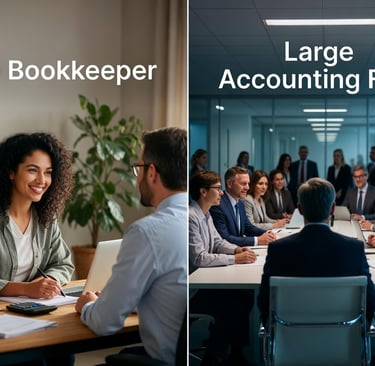
Large accounting companies often manage hundreds or thousands of clients through teams of staff. Your books might get passed between junior associates, with limited direct access to the person overseeing your account. Communication can feel formal, slow, and one-size-fits-all.
A solo bookkeeper, by contrast, works directly with you. They learn the nuances of your business — your cash flow patterns, unique expenses, seasonal fluctuations, and growth goals. This deep understanding leads to more tailored advice, quicker responses, and proactive support.
Instead of generic reports, you get insights that actually fit your operations. Many small business owners describe their solo bookkeeper as an extension of their team — someone who truly cares about their success.
2. Significantly Lower Costs Without Sacrificing Quality
One of the biggest advantages of hiring a solo bookkeeper is cost efficiency. Large firms carry substantial overhead — office space, multiple salaries, marketing, and administrative staff — which gets passed on to clients through higher fees.
Solo professionals operate with minimal overhead, often from home or a small setup. This translates to more affordable hourly rates or flat monthly fees that fit tight small business budgets. You pay for the expertise you need without subsidizing layers of corporate structure.
For many startups and growing businesses, this flexibility means you can scale services up or down as needed — no long-term contracts or minimums that feel burdensome. In the long run, accurate, attentive bookkeeping from a solo pro can help you avoid costly mistakes that eat into profits.
3. Greater Flexibility and Responsiveness
Need help catching up on last quarter's transactions? Want to adjust services during a busy season? Solo bookkeepers are often more adaptable. Many offer flexible scheduling, quick turnarounds, and customized packages without rigid corporate protocols.
Big firms may require formal requests, approvals, or wait times due to team workflows. With a solo expert, you can often pick up the phone or send a quick message and get a personal response — sometimes the same day.
This agility is especially valuable for small businesses with irregular cash flow, seasonal operations, or rapid changes.
4. Dedicated Attention and Accountability
In a large firm, your file might be one of many on a team member's desk. Solo bookkeepers typically maintain a smaller client roster, meaning your business gets their full focus.
There's direct accountability: If something needs attention, it's not lost in bureaucracy. Many solo professionals build long-term relationships with clients, fostering trust and continuity that feels more human and reliable.
5. Expert Knowledge Without the Corporate Overhead
Don't assume "solo" means limited expertise. Many solo bookkeepers are highly skilled professionals with years of experience, certifications, and specialized knowledge in small business finances, software like QuickBooks, and industry-specific needs.
They stay current on tax rules and best practices because their reputation depends on it. Plus, they often collaborate with CPAs or accountants when higher-level tax planning or audits arise — giving you the best of both worlds without the full-firm price tag.
6. Better for Building Long-Term Financial Health
Solo bookkeepers excel at the day-to-day tasks that matter most for small businesses: accurate transaction recording, reconciliation, invoicing, expense tracking, and cash flow monitoring. These foundations help you make informed decisions, spot issues early, and prepare smoothly for tax season.
Large firms might push bundled services (tax prep, advisory, etc.) that you don't yet need, inflating costs. A solo bookkeeper focuses on what serves you now while growing alongside your business.
When a Large Firm Might Make Sense
To be fair, very large or complex businesses (e.g., those with government contracts, multiple entities, or heavy compliance needs) may benefit from the resources and specialist teams at bigger firms. But for most small businesses — especially those under a certain revenue threshold or with straightforward operations — the personal touch and affordability of a solo bookkeeper win out.
Making the Right Choice for Your Business
Hiring the right bookkeeper isn't just about crunching numbers — it's about freeing up your time to focus on what you do best: growing your business, serving customers, and doing what you love.
A solo bookkeeper offers affordability, personalization, flexibility, and dedicated attention that large, impersonal companies often struggle to match. You get professional results without the corporate markup or red tape.
If you're tired of juggling spreadsheets, worrying about accuracy, or feeling like just another client number, it might be time to bring in a solo bookkeeper who treats your business like their own.
Ready to experience the difference? Reach out today for a no-obligation consultation. Let's discuss how personalized bookkeeping can support your goals without breaking the bank.